
Places To Visit In Kerala
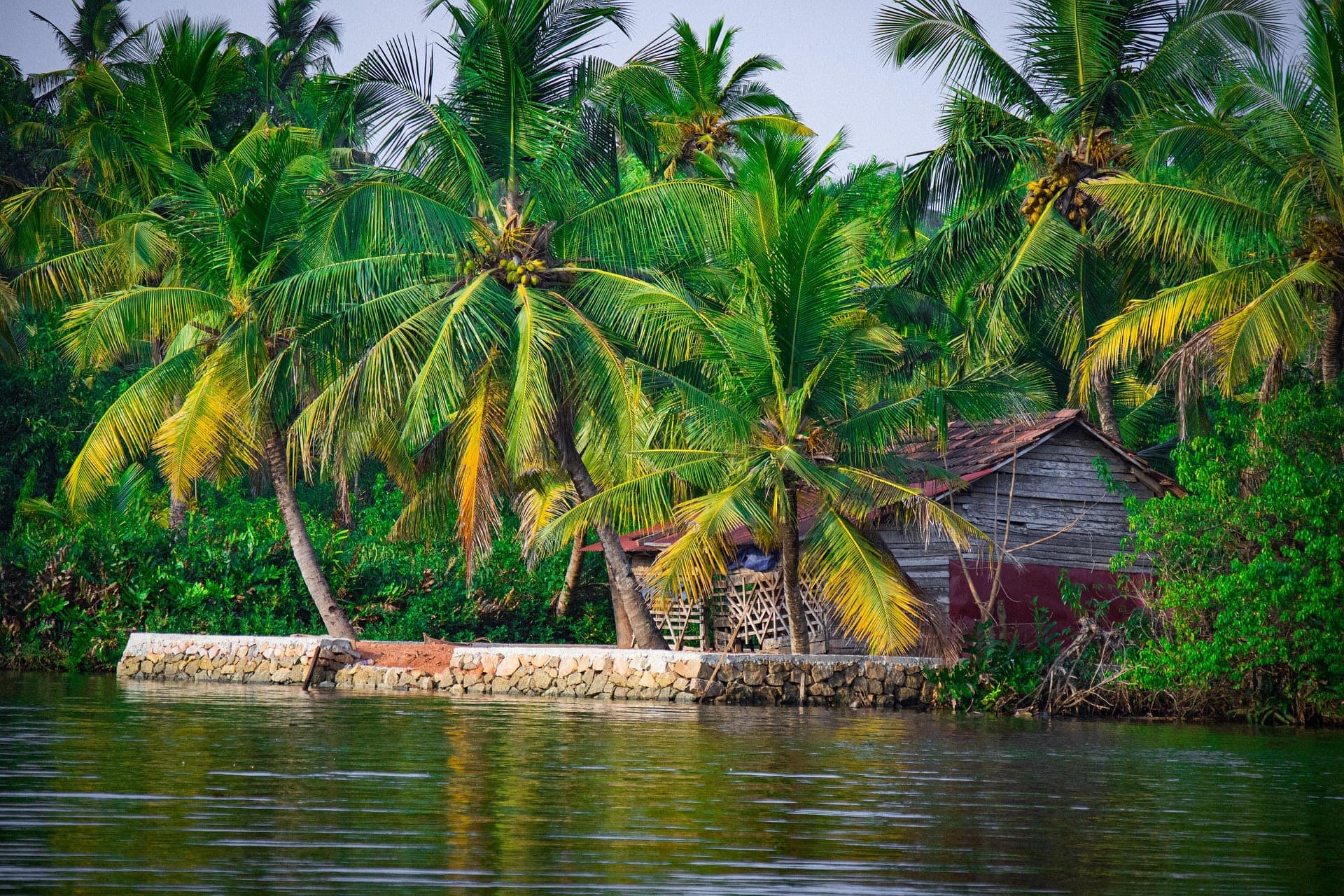
Imagine... a place where homes don't sit on the ground but float on the water.
Where clouds descend from the sky to drift through the tea gardens. And where the beauty is so breathtaking, you’ll feel as though nature did its finest work while creating this place.
But wait...
There is a secret about this paradise that 90% of travelers don't know. Stay tuned until the end of this blog; you’ll find all the information you need for a trip to Kerala here. We’ll cover the total cost of the trip, the mistakes you absolutely must avoid, and why Kerala is known as "God's Own Country."
We’ll explore the places in Kerala that can recharge your weary life...
And discover what it is about the local cuisine that makes people forget all about going home!
So, let’s embark on a journey to Kerala—one you’ll likely never forget Friends...
The daily morning rush...
The traffic on the roads...
The office stress...
And the endless daily grind...
You’re tired, aren't you?
Then pack your bags. Because today, we’re heading to a corner of India, where even the hands of the clock seem to move at a more relaxed pace... Kerala.
As soon as you arrive in Kerala, there’s one thing you’ll see almost everywhere...
Coconuts! Coconut in the food...
Coconut in the oil...
Coconut in the sweets...
And sometimes, coconut water is even cheaper than bottled water!
Now, you tell me...
In a place where nature is so beautiful...
what else would you call it but 'God's Own Country'?
But the real story of Kerala begins now... here are the top places to visit in Kerala:
MUNNAR
Nestled in the hills of Kerala, Munnar sits at an altitude of approximately 1,600 meters above sea level.
And believe me...The moment you arrive, your eyes will hardly believe that...
This is actually India!
As your vehicle moves along the winding roads of Munnar...The scenery outside the window begins to shift gradually.
Tea plantations stretch as far as the eye can see. It looks as though a lush green velvet blanket has been spread across the entire mountain.
And white mist drifts slowly over that blanket. As if clouds have descended to earth to whisper secrets to the tea leaves.
And standing amidst this mountainous realm is...
Anamudi Peak.
At an altitude of approximately 2,695 meters. It is the highest peak in Kerala. From a distance, it looks like a king standing amidst his entire kingdom. And in the vicinity of these hilly regions, one finds a truly special creature...
The Nilgiri Tahr.
A rare mountain animal that is an integral part of the Nilgiri mountain ecosystem.
In other words, this landscape of Munnar is not just beautiful. It is unique, too.
And oh...
A small warning!
At every beautiful viewpoint in Munnar, you might come across couples...
Who imagine themselves as Shah Rukh Khan and Kajol, striking romantic poses!
So, if you are single... brace yourself!
THE FOOD OF MUNNAR
Now, after breathing in the cool mountain air. You are bound to work up an appetite!
And in Munnar, the day can begin. With piping hot Puttu and Kadala Curry. Steamed, rice-based Puttu... paired with a spicy black chickpea curry. One bite...And the chill is practically gone!
And if you’re a fan of non-vegetarian food... you simply must try Kerala’s famous chicken curry with *appam*.
The blend of coconut and spices... paired with the soft *appam*... it’s hard to find better comfort food in the hills.
And then...
Sitting amidst the tea gardens with a hot cup of Kerala tea.
The aroma of fresh cardamom...The cool mountain breeze...And the greenery stretching out before you.
Sometimes, even a single cup of tea... becomes pure therapy.
But friends...
The true magic of Kerala isn't just in the hills. The real story begins where the roads end... and the paths are formed by water.
ALLEPPEY / ALAPPUZHA
Alleppey
The heart of Kerala’s famous backwaters. The biggest attraction here is—
The backwaters.
A vast network of canals, lakes, and waterways...Where you’ll find traditional houseboats. And a houseboat isn't just a boat.
It’s a floating stay...
Complete with a bedroom...
A kitchen...
A balcony...
And a view of Kerala changing every minute right outside your window.
Now, consider the difference between Goa and Alleppey.
In Goa, people get tired from partying... while in Alleppey, people... get tired from chilling!
Here, your only job is—
Sit back and relax on the houseboat. Let the boat drift gently...And enjoy the scenery unfolding before you.
No horns, no traffic, no office stress—just the soft lapping of water. And the sounds of birds perched in the trees. As the boat moves forward... you catch a glimpse of authentic life in Kerala.
Small villages nestled along the water's edge. Daily life playing out right outside the homes. Children heading to school...And in some places, people using boats as their primary mode of transport.
Here, the water isn't just scenery... it is an integral part of people's lives.
And yes...In the backwaters, you might even spot floating shops and small-scale local commerce taking place right on the boats.
In other words...From vegetables to snacks... you see a whole little world operating right there on the water.
KERALA CUISINE
And now, let's talk about something... without which a trip to Kerala would be incomplete.
The food!
If you get to enjoy a traditional Kerala meal on the houseboat... consider your journey truly special. A meal served on a banana leaf...
Piping hot rice...
Sambar...
Coconut-based curries...
And if you are a seafood lover...
You simply must try *Karimeen Pollichathu*.
Fresh pearl spot fish is marinated with spices, wrapped in a banana leaf, and slow-cooked. And when that leaf is unwrapped... its aroma wafts through the entire boat. In Kerala, food isn't just about filling your stomach... it is an essential part of the experience. And for vegetarian food lovers...
Don't worry at all.
Kerala’s coconut-based curries...
Banana chips...
Avial...
Sambar...
And traditional Kerala meals...
You certainly won't run out of options. Sometimes, the aroma wafting from the boat's kitchen... leaves a more lasting impression than a fancy restaurant nearby.
THE MAGIC OF SUNSET
And then... evening begins to set in. The sun slowly starts blending its hues into the waters of the backwaters.
The shadows of the coconut trees begin to lengthen...
A golden reflection forms on the water... and the boat moves steadily forward, slicing through the calm surface.
In that moment, you realize something—
Serenity cannot be bought... it can only be felt. Because the story of Kerala isn't over yet; the sights ahead are going to be even more spectacular. We are heading to a place where it suddenly feels as though... the land itself has come to an end.
Varkala. — From Varkala to Kochi
Kerala’s only beach where towering cliffs stand right by the sea.
Did you know these cliffs are millions of years old?
They are known as the Varkala Formation. If you still think "beach" is synonymous only with Goa, come to Varkala and let that misconception vanish. The scenery here is truly unique.
A long line of cafes atop the cliff, the roaring Arabian Sea below, and you in the middle—holding a coconut in your hand.
Here, you get to experience a multitude of things all at once.
People often call Varkala the "hippie capital" of Kerala, because the very air here is infused with a distinct sense of tranquility that draws travelers from all over the world. And then comes the evening...
When the sun slowly begins to sink into the Arabian Sea, and the entire sky turns shades of orange and pink. The red cliffs begin to glow like gold. Nestled beneath these very cliffs lies Papanasam Beach. It is said that taking a dip in these waters washes away one's sins.
That is how it got its name—Papanasam, meaning 'the destroyer of sins.'
And nearby stands the Janardhana Swamy Temple, dating back nearly 2,000 years.
Here, you’ll find both spirituality and fun in one place.
And now, it’s time to satisfy your appetite!
Fresh seafood...
As evening falls, the day’s fresh catch—fish, prawns, and lobsters—is displayed on beds of ice outside the cafes.
You pick the fish you like... and in no time, it’s grilled with spices and served right at your table.
Fresh seafood accompanied by the sound of the ocean—what could be more luxurious?
And the local specialties include fresh fruit smoothies and banana pancakes... If you crave an Indian flavor, you can get a piping hot masala dosa, too. Here, foreigners embrace the local vibe...
And the locals adopt a bit of the international style! Now, a question for you.
Where did your heart get hooked during this journey so far?
In the cool hills of Munnar, the floating houses of Alappuzha, or this beautiful seaside in Varkala?
But friends...Kerala isn't just about beauty; it’s also about history. Now, let’s head to a city that changed the destiny of all of India. A city where, over 500 years ago, a foreign traveler arrived by sea... and where massive fishing nets from China still stand today. So, what exactly is the secret of this city?
Kochi... known as the Queen of the Arabian Sea.
This isn't just any ordinary city, friends. It is the city that marked the beginning of a new era in maritime trade between Europe and India. In 1498, the Portuguese navigator Vasco da Gama reached India by sea.
In fact, he did not arrive in Kochi initially; instead, he landed at Kappad, near Kozhikode. However, Kochi subsequently became a significant hub for European maritime trade and colonial history. This era went on to shape the history of India for centuries to come.
And did you know?
Vasco da Gama's connection with India was not limited to just that one voyage. He passed away in Kochi during his third visit in 1524. He was initially buried at St. Francis Church in Fort Kochi.
This church is one of the oldest European-built churches in India.
Even today, his original burial site and tombstone can be seen inside the church, although his remains were taken to Portugal 14 years later. And now, for one of Kochi's most iconic sights...The massive Chinese fishing nets standing along the seashore. They are known as *Cheena Vala*.
Looking at these huge wooden structures, it feels as though a giant swing is suspended over the sea. It is believed that this fishing-net technology arrived in Kochi from China between 1350 and 1450.
Even today, you can see them in action at Fort Kochi beach. And if you wish to experience history and culture up close, let's head towards Mattancherry. The old spice markets and colonial-era buildings here remind you of the era when traders from across the globe came to Kochi in search of Kerala's spices.
Even today, the aroma of cardamom, cloves, and black pepper lingers in the air.These were the very spices, friends, for which people from all corners of the world crossed the seas to reach Kerala. And now, let's talk about Kerala's cuisine.
The ultimate highlight of Kerala's food—the *Sadya*!
Served on a banana leaf, the traditional *Sadya* features a wide array of dishes. Rice, *sambar*, *avial*, *thoran*, *pachadi*, *payasam*, and much more. And the most interesting part?
A traditional *Sadya* is typically eaten with one's hands. So many flavors served on a single banana leaf...One taste, and the flavor of Kerala stays with you forever.
To be honest...The most beautiful thing about Kerala isn't just its mountains or the sea. Its true beauty lies in its culture and its people. If you, too, want to witness this beauty firsthand and make your trip memorable, share this video with the people you’d love to visit Kerala with.
But wait...
Before the video started, I made you a promise. To cover the total cost of a Kerala trip...And to reveal that one mistake almost every tourist tends to make—a mistake that causes a significant portion of their trip to be spent just traveling.
So, let me tell you what that mistake is.
The most common mistake is—
Trying to cover all of Kerala in just 3 or 4 days.
You see, every destination in Kerala offers a unique experience.
Mountains and tea plantations in Munnar...
Backwaters and houseboats in Alappuzha...
The ocean and cliffs in Varkala...
And history, culture, and colonial heritage in Kochi. The issue is that the travel time between these destinations can be quite long.
Those who try to see everything in a rush end up spending half their time in a vehicle and the rest simply recovering from exhaustion.
That’s why you should plan for at least 6 to 7 days in Kerala. Because Kerala is a place to slow down and soak it all in, not to rush through. Now, let’s talk about the best time to visit Kerala.
If you are looking for comfortable weather and sightseeing, the period from October to March is generally the most popular.
The weather remains relatively pleasant during this time. On the other hand, Kerala experiences the monsoon season between June and September.
Rainfall can be quite heavy during this period, but for those who love lush green landscapes and the monsoon season, this time of year holds a special charm of its own.
And now, the most important question—
What are the Kerala trip cost?
If you plan a 6 to 7-day trip to Kerala with Holiday Travel Zone, you can book a complete Kerala holiday package. The exact price will depend on your travel dates, hotel category, number of travelers, and inclusions.
So, friends...
That was our Kerala travel guide.
For any queries regarding Kerala trips, packages, or bookings, please call or message us at 8010707888.
And visit: Holiday Travel Zone
We’ll see you again for your next journey with another destination.
Until then, happy traveling!